Noto
Our final stop is Noto, often called the “capital of Sicilian Baroque.”
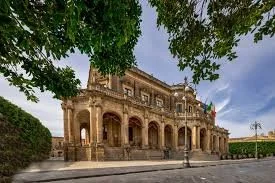
Unlike Syracuse, Noto feels less ancient and more theatrical. The city was almost entirely rebuilt after the devastating earthquake of 1693 destroyed much of southeastern Sicily. What emerged afterward was one of the most beautiful examples of Baroque urban planning in Europe.
The entire city was designed with harmony, elegance, symmetry, and dramatic perspective in mind. Buildings were constructed from local limestone that glows honey-gold in the late afternoon light.
Corso Vittorio Emanuele
The main street of Noto, Corso Vittorio Emanuele, acts almost like an open-air architectural gallery.
As you walk along it, churches, palaces, balconies, staircases, and piazzas unfold one after another in carefully choreographed sequence. The city was intentionally designed to impress and inspire.
Noto Cathedral
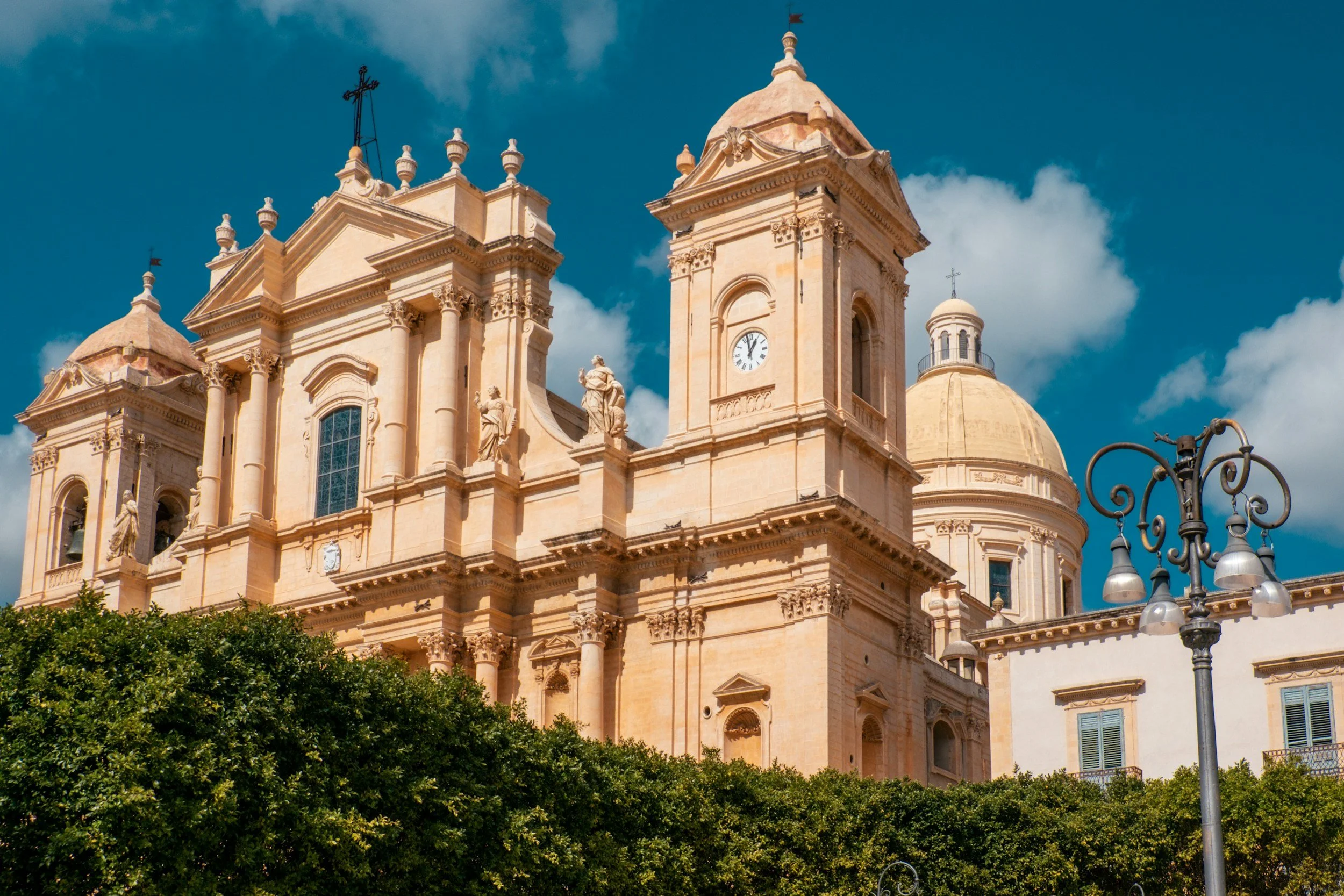
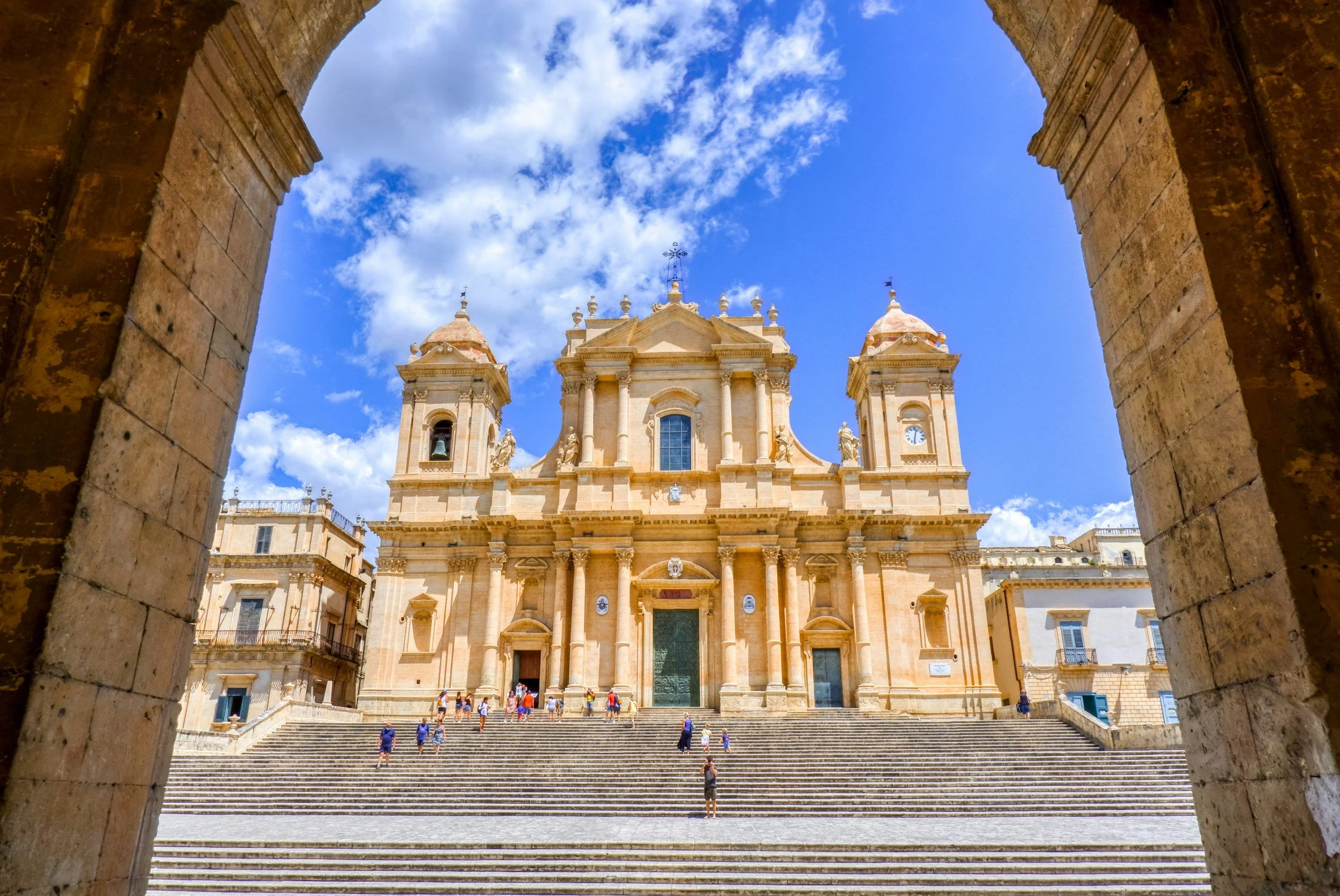
At the top of a grand staircase sits the Noto Cathedral, one of the symbols of Sicilian Baroque architecture.
The cathedral’s elegant façade dominates the piazza below. Interestingly, the cathedral partially collapsed in 1996 due to structural weakness and was painstakingly restored over many years before reopening. Today it stands once again as the centerpiece of the city.
Church of San Carlo al Corso
The Church of San Carlo al Corso offers one of the best panoramic viewpoints in the city.
Those who climb to the terrace are rewarded with sweeping views over Noto’s golden rooftops, church domes, and elegant streets — especially beautiful near sunset, when the limestone buildings seem to glow from within.
What makes this day so remarkable is the way it moves through entirely different worlds within a relatively short distance: ancient Greek civilization, Roman Sicily, medieval legends, bustling Sicilian street life, and finally the grand optimism and beauty of the Baroque era.
In Sicily, history is never confined to museums. It remains part of the streets, the buildings, the food, and the rhythm of daily life.
Palazzo Nicolaci
The Palazzo Nicolaci is famous for its extraordinary balconies.
Each balcony is supported by highly decorative carved figures — winged horses, mermaids, lions, grotesque faces, and mythological creatures. The palace was designed to display wealth, imagination, and aristocratic power in the most theatrical way possible.