
Taormina
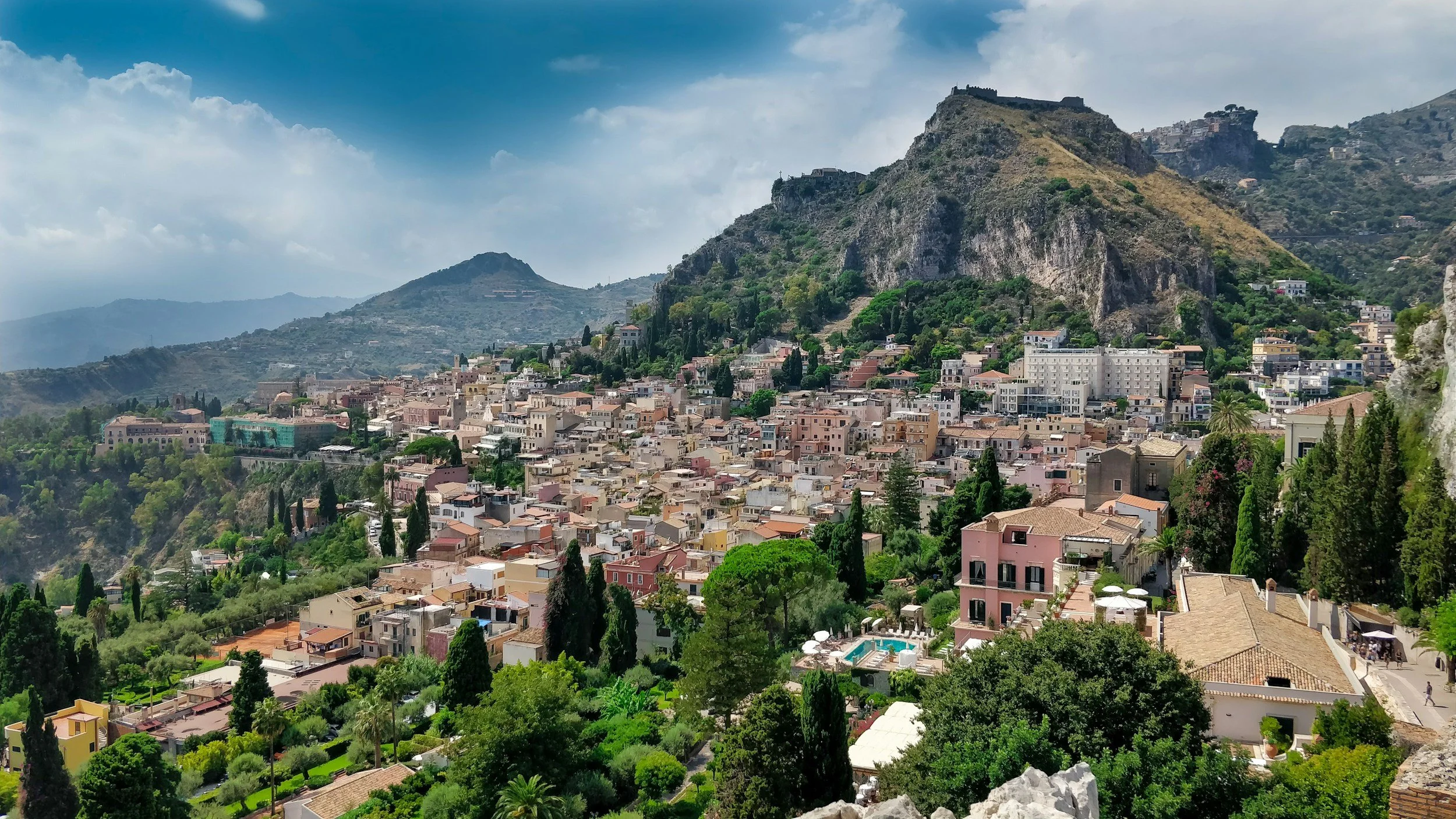
Perched high above the Ionian Sea, Taormina has been attracting travelers, artists, writers, and dreamers for centuries. Long before it became one of Sicily’s most famous destinations, people were drawn here for the same reasons visitors still are today: the dramatic views, the warm light, the sea below, and the constant presence of Mount Etna rising in the distance.
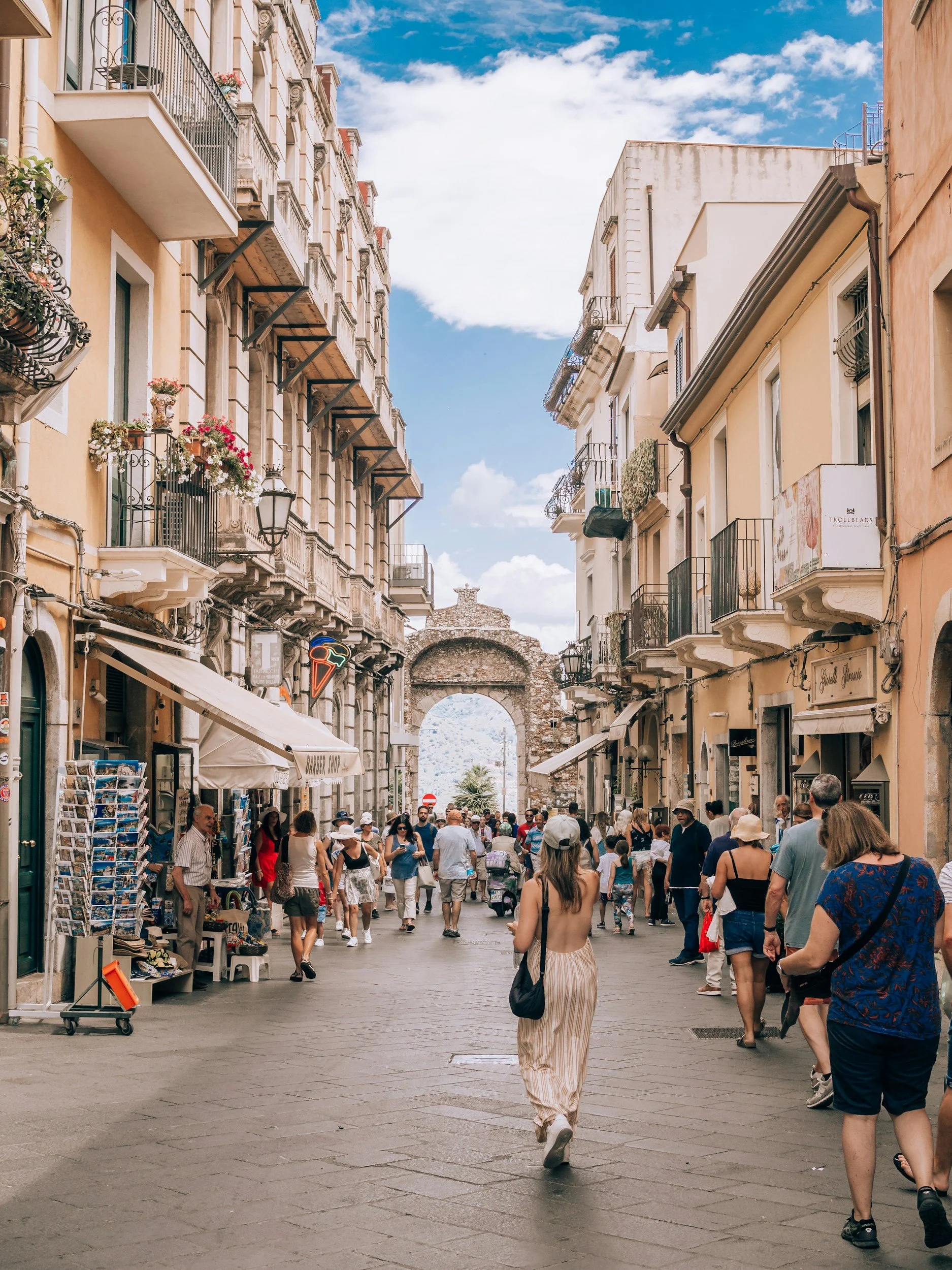
Taormina feels suspended between mountain and sea. Narrow stone streets wind past old churches, hidden courtyards, balconies overflowing with flowers, and cafés that seem designed for lingering. The town itself is elegant and lively, but what truly makes Taormina unforgettable is its setting. Nearly every viewpoint feels cinematic.
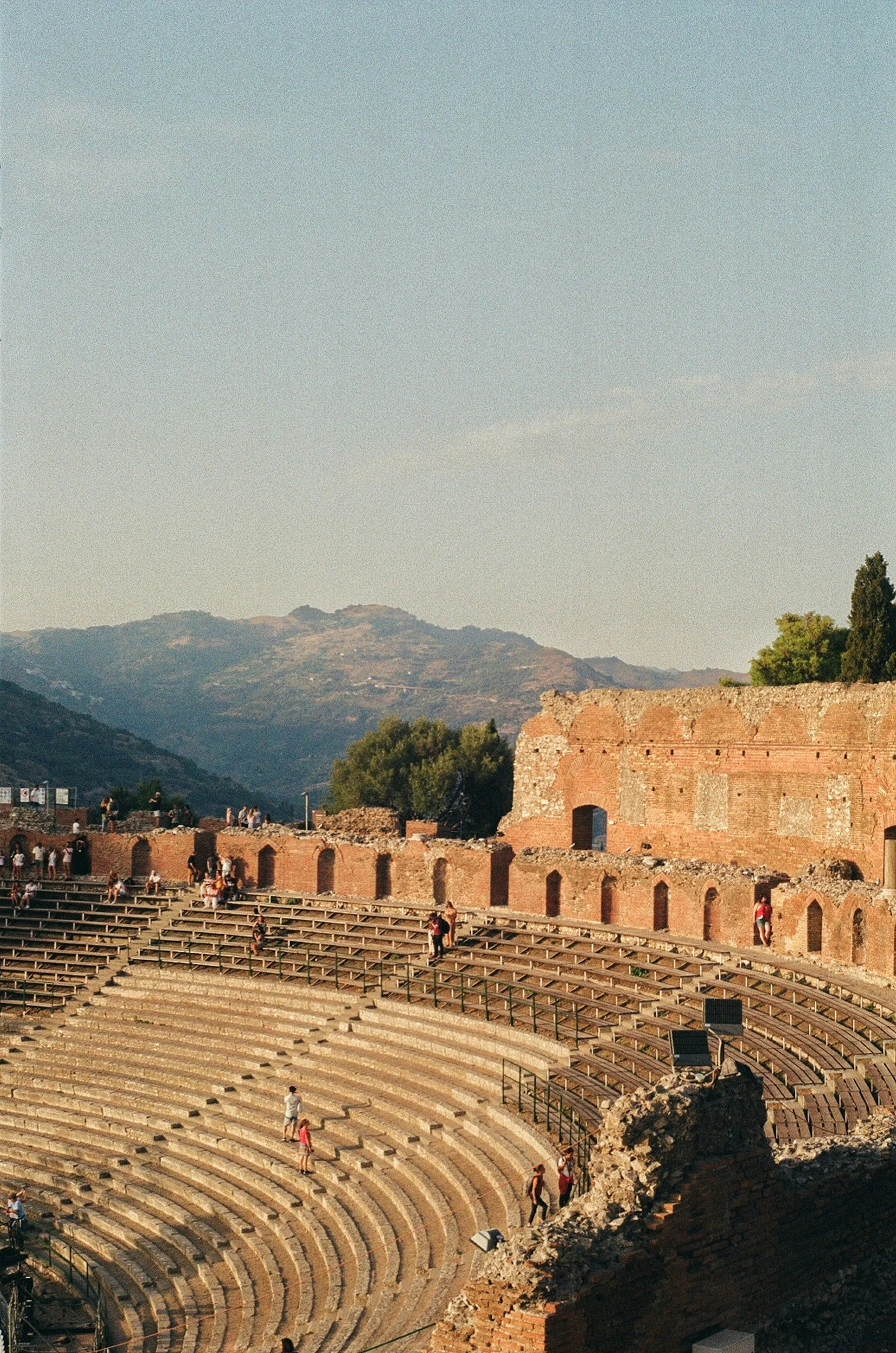
The town’s history stretches back to ancient Greece, when settlers arrived in this part of Sicily around the 4th century BC. But the true heart of Taormina — and one of the most extraordinary sites in all of Sicily — is the Ancient Theatre of Taormina.
Built by the Greeks and later expanded by the Romans, the theatre sits high on a cliff overlooking the sea. It is often described as one of the most beautiful ancient theatres in the world, not necessarily because of its size, but because of its setting. From the stone seating area, audiences could watch performances while looking out toward the coastline and Etna in the background — a view that remains almost surreal today.
The Greeks believed theatre was not just entertainment, but an important part of civic and cultural life. Tragedies, comedies, music, and public gatherings all took place here. Later, under Roman rule, the theatre was modified for larger spectacles and performances. Nearly 2,000 years later, it is still used today for concerts and festivals, continuing the tradition of gathering people together in this extraordinary space.
Taormina became especially famous during the 19th century, when aristocrats, writers, and artists traveling through Europe on the “Grand Tour” began stopping here. Many fell completely in love with the town. Writers described the light as magical. Painters tried to capture the landscape. Wealthy travelers came for weeks and stayed for months.
Even now, Taormina has a timeless quality to it. In the mornings, the town feels calm and sunlit as cafés open and locals sweep stone doorsteps. By evening, the streets fill with people strolling during the passeggiata, stopping for aperitivo, gelato, or simply to admire the changing colors over the sea.
A few fun things to know about Taormina:
The Ancient Greek Theatre was built with extraordinary acoustics — even today, performances there require surprisingly little amplification.
Because Taormina sits high above the coastline, it was historically easier to defend from invasion than many coastal towns.
The town has long attracted famous visitors, including writers like D. H. Lawrence and Oscar Wilde.
Taormina’s views have appeared in countless films, fashion campaigns, and travel photography over the decades.
The beaches below Taormina, especially around Isola Bella, are famous for their crystal-clear water and dramatic rock formations.
What makes Taormina special is not just one monument or one viewpoint. It is the combination of everything together: ancient history, sea air, mountain views, elegant streets, and the feeling that life here is meant to be enjoyed slowly.
Few places capture the romance of Sicily quite like Taormina.